How to Keep Your Pool Cool During a Heat Wave
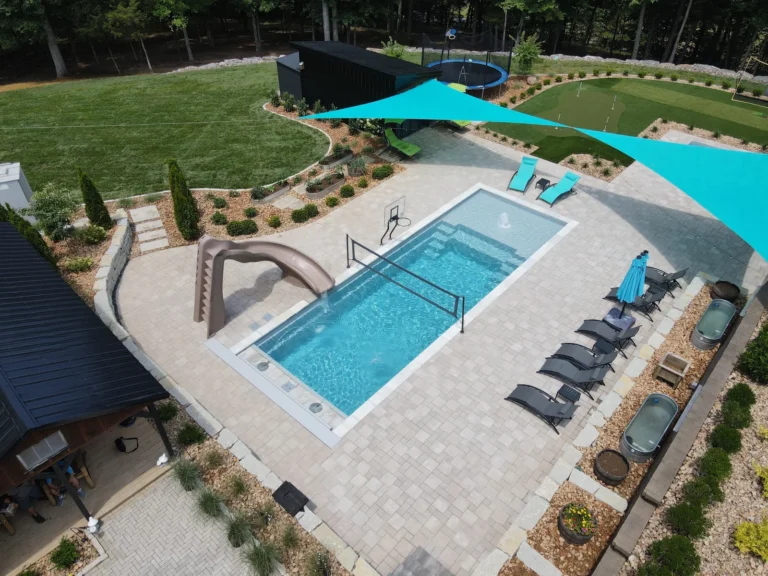
The fastest ways to cool pool water during a heat wave are running a pool aerator or fountain feature overnight, removing heat-retaining covers in the evening, shifting more pump runtime to cooler hours, and adding shade that reduces direct sunlight. When temps push past 90°F for several days in a row, pool water can climb into the mid-90s and stay there. Here’s what actually works to bring it back down.
Why Your Pool Gets So Hot So Fast
Pool water holds heat. Once the sun heats the surface, that heat gradually spreads throughout the pool, causing the overall water temperature to rise. A few days of 90°F+ heat indexes in a row, especially with high humidity, can push water temps into the 90s even in a shaded backyard.
Add a black liner, a south-facing yard, or a pool cover left on during the day, and it gets worse. None of that is a defect in your pool. It’s just physics working against you in July.
The Fastest Ways to Cool Pool Water
Run your aerator or water feature overnight. Fountains, deck jets, and aerators cool pool water by increasing evaporation. They are generally most effective during the evening and overnight hours, when the surrounding air is cooler. Results may be more modest during humid Indianapolis weather because high humidity slows evaporation.
Shift more of your pump runtime to the evening and early morning. Running the pump during cooler hours can improve the effectiveness of fountains, aerators, and other water features. Keep enough daily runtime for proper filtration, sanitation, and circulation rather than reducing pump operation solely to avoid daytime heat.
Remove heat-retaining covers overnight. Solar covers and similar pool covers reduce evaporation and trap heat. During a heat wave, uncovering the pool in the evening and leaving it open overnight allows more heat to escape. Daytime use depends on the type of cover, since an opaque cover may provide shade while a transparent solar cover can contribute to warming.
Add shade where you can. Umbrellas, shade sails, and strategically placed trees reduce direct sun exposure on the water’s surface. Even partial shade during peak afternoon hours makes a measurable difference over a few days.
Do not rely on bagged ice for a full-size pool. Ice may provide brief relief in a spa or very small pool, but the amount needed to noticeably cool a residential swimming pool is usually impractical.
What Doesn’t Actually Help
Chilling with a pool chiller is effective but usually overkill for most residential pools. Pool chillers exist and do work, but they’re expensive to install and run, and typically make more sense for pools that stay uncomfortably warm most of the season rather than just during heat waves.
Adding more chemicals does not cool water. This is a common mix-up. Chlorine, shock, and pH balancers manage water chemistry, not water temperature. Hot, sunny weather can increase chlorine demand and accelerate chlorine loss, especially when the pool receives prolonged direct sunlight. You may need to test and balance the water more frequently during a heat wave, but that is separate from cooling the pool.
What Our Team Recommends During Indiana Heat Waves
During stretches of 90°F+ weather across Indiana, we typically recommend combining a water feature with an overnight pump schedule adjustment first, since that combination tends to produce the most noticeable drop in water temperature without any added equipment cost. For pools that stay hot most of the season regardless of the weather, that’s usually a sign it’s worth a broader look at your setup, including shade coverage and circulation, during a full season service visit.
We also see more chemical imbalance problems during heat waves because hot, sunny weather can increase chlorine demand and accelerate chlorine loss. Test the water more frequently than usual during prolonged heat, especially after heavy pool use or storms, so problems can be corrected before algae develops.
Heat Wave Pool Checklist
- Run water features or aerators during the evening and overnight
- Shift more pump runtime to the evening and overnight
- Remove heat-retaining pool covers overnight
- Add shade with umbrellas or shade sails where possible
- Test and balance the water more frequently during prolonged heat
FAQ
Why is my pool water so warm even though I run the pump every day?
A pool pump circulates and filters the water, but circulation alone does not significantly cool it. Shifting more of the pump schedule to the evening or overnight can help when the pump also powers a fountain, aerator, or other cooling feature.
Does adding chlorine or shock cool the water down?
No. Pool chemicals manage sanitation and water balance, not temperature. Hot, sunny weather can increase chlorine demand and accelerate chlorine loss, so you may need to test the water more frequently during a heat wave.
Should I leave my pool cover on during a heat wave?
Heat-retaining covers, including solar covers, should generally be removed in the evening so the pool can release heat through evaporation overnight. Daytime use depends on the cover type. An opaque cover may help shade the water, while a transparent solar cover may contribute to additional warming.
Are pool chillers worth it for occasional heat waves?
Usually not. Chillers make more sense for pools that run warm most of the season. For occasional heat waves, water features and pump schedule changes are typically enough.
How much can a water feature actually lower pool temperature?
It varies by pool size and feature type, but evaporative cooling from a fountain or aerator can make a noticeable difference over a few days, particularly when combined with an adjusted pump schedule.
Dealing with a pool that just won’t cool down no matter what you try? Contact our team for a free assessment, or ask about adding our Full Season Service to keep your water balanced and comfortable all summer long.