Fiberglass vs. Vinyl vs. Concrete Pools in Indiana: Which Is Best?
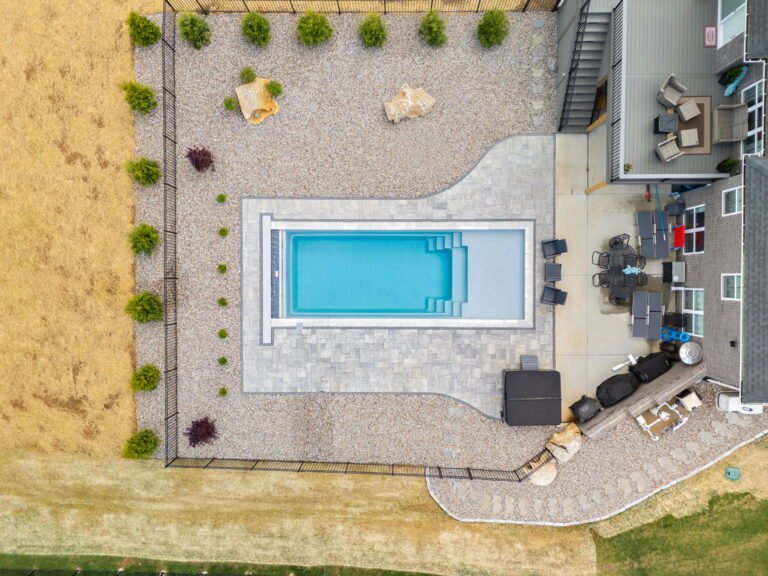
Which Inground Pool Type Is Best for Indiana?
For most Indiana homeowners, a fiberglass pool is the best choice. It handles freeze and thaw cycles well, installs faster, and costs less to maintain over the years than a vinyl liner or concrete pool. Below, we compare all three so you can see where each one shines and where it falls short.
The Three Main Types of Inground Pools
- Fiberglass: A one-piece shell made in a factory, delivered to your home and set in place by crane.
- Vinyl liner: A frame with a custom vinyl liner that holds the water.
- Concrete (gunite or shotcrete): Built on site from sprayed concrete, then plastered or finished.
All three can make a great backyard pool. The differences show up in install time, upkeep and how well they handle our climate.
Fiberglass Pools: Pros and Cons
Pros
- Smooth, non-porous surface that resists algae and is gentle on feet
- Holds up well to Indiana’s freeze and thaw cycles
- Fastest install of the three, since the shell arrives finished
- No liner replacements and no replastering
- Uses fewer chemicals over time thanks to the smooth surface
Cons
- Shapes and sizes come from set models, so fully custom shapes are not an option
- Width is limited by what can be transported on the road
Vinyl Liner Pools: Pros and Cons
Pros
- Flexible shapes and sizes
- Soft surface underfoot
- Lower upfront cost in many cases
Cons
- Liners can tear and need replacing every several years, which adds up over time
- Wrinkles, fading and punctures from toys, pets or sharp objects
- More care needed around freeze and thaw and when closing the pool
Concrete Pools: Pros and Cons
Pros
- Fully custom shapes, sizes and depths
- Very durable structure
Cons
- Longest install time, often months from start to finish
- Porous surface that needs more brushing and chemicals to keep algae away
- Needs resurfacing or replastering over the years
- Rough surface can be hard on feet and swimsuits
- Freeze and thaw cycles can be tough on plaster finishes
How They Compare on What Matters Most
Install time: Fiberglass is the clear winner. The shell is built in a factory, so the on-site work moves quickly. Concrete takes the longest.
Maintenance: Fiberglass wins again. Its smooth surface resists algae, so you spend less time brushing and less on chemicals. Concrete needs the most care.
Long-term upkeep: Fiberglass avoids the two big recurring projects of the other types: liner replacement for vinyl and resurfacing for concrete.
Design freedom: Concrete wins here. If you want a one-of-a-kind shape, concrete gives you the most options. Most homeowners find a fiberglass model that fits their yard and their wish list.
Indiana weather: Fiberglass and its flexible, non-porous shell handle our winters well. A professional pool closing protects any pool type through the cold months.
Why Pools Today Builds Fiberglass
We install one-piece fiberglass pools because they give Indiana families the most swimming for the least upkeep. Our models range from compact pools for smaller yards to larger family pools with tanning ledges and plenty of room to play. You can browse every model on our pools page and see how each install comes together on our installation process page.
If you are still weighing other options, our guide to plunge pools vs. spas can help if space is tight, and saltwater vs. chlorine walks through how to keep your water clean.
FAQ: Fiberglass vs. Vinyl vs. Concrete Pools
What is the best type of inground pool for Indiana?
For most homeowners, fiberglass. It handles freeze and thaw cycles well, installs quickly and needs the least maintenance over time.
How long does a fiberglass pool last?
A well-built fiberglass pool is designed to last for decades, and it never needs a liner replacement or replastering.
Do fiberglass pools crack in cold weather?
Fiberglass is flexible and non-porous, which helps it handle Indiana winters. Like any pool, it should be closed properly each fall to protect the plumbing and equipment.
Which pool type needs the least maintenance?
Fiberglass. Its smooth surface resists algae, so it typically needs less brushing and fewer chemicals than vinyl or concrete.
Can I get a custom shape with fiberglass?
Fiberglass pools come in set models, so the shapes are pre-designed. With a wide range of sizes and features, most families find a model that fits their yard.
Start Planning Your Fiberglass Pool
If low maintenance and a faster install sound right for your family, fiberglass is the way to go. Explore your options with our Build Your Pool tool, then contact Pools Today to reserve your spot on our 2027 build schedule.