Late Summer Pool Care: Beating Algae and Chemical Imbalance in the August Heat
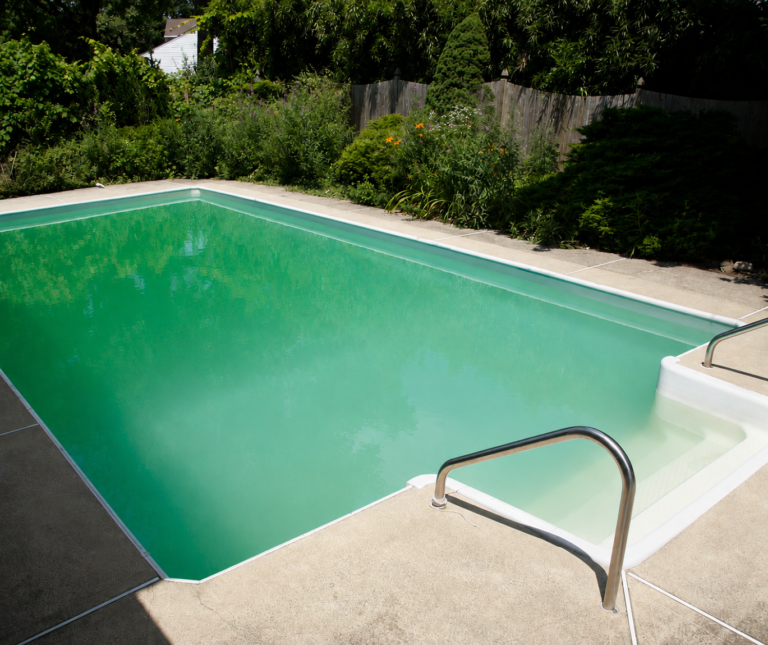
Late summer pool care means testing your water more often and adjusting chlorine and pH sooner than you did in June, because heat, sunlight, and heavy swimmer use burn through sanitizer at a much higher rate. The fix is a tighter testing schedule (every 1-2 days instead of weekly), keeping free chlorine at 2-4 ppm and pH at 7.2-7.6, and catching algae the moment water starts to dull instead of waiting for it to turn green. This guide covers why August heat throws chemistry off so fast, how to spot algae before it blooms, and a simple routine that keeps your water clear through Labor Day.
Why Chlorine and pH Drift Faster in August Heat
Warm water and long daylight hours work against your pool chemistry in a few specific ways.
- UV burns off unstabilized chlorine fast. Without enough cyanuric acid (CYA) in the water, an outdoor pool sitting in direct August sun can lose 75-90% of its free chlorine within two hours.
- Heat speeds up chemical reactions. Warmer water accelerates the rate at which chlorine breaks down and reacts with organic material, so a pool that held steady for a week in May might need attention every other day in August.
- More swimmers mean more chlorine demand. Sweat, sunscreen, and body oils all consume chlorine. Late summer weekends, pool parties, and kids home from school all add bather load right when the water is already working overtime.
- Free chlorine below the recommended minimum leaves less protection against germs and algae. According to the CDC, pools should maintain at least 1 ppm free chlorine, or at least 2 ppm when CYA is used. That’s why a pool that only gets tested once a week can slip out of range before you catch it.
- High pH makes chlorine less effective. Once pH climbs above 8.0, chlorine’s ability to kill germs drops sharply even if your test strip still shows a decent chlorine reading. This is a common reason pools “have chlorine but still grow algae.”
In southern Indiana, stretches of 90-degree days combined with intense sunlight, summer storms, and heavy pool use in late July and August create exactly the conditions that push chemistry out of range fastest. If your pool has looked cloudy or you’ve had to add extra chlorine more often this month, that’s the summer heat and activity talking, not something you’re doing wrong.
Ideal Chemical Ranges for Late Summer
- Free Chlorine: 2-4 ppm — the active sanitizer that kills algae, bacteria, and viruses
- pH: 7.2-7.6 — controls how effectively chlorine works and prevents irritation
- Total Alkalinity: 80-120 ppm — keeps pH from swinging wildly after each adjustment
- Cyanuric Acid (CYA): 30-50 ppm — shields chlorine from UV breakdown in direct sun
- Calcium Hardness: 200-400 ppm — prevents corrosion (too low) or scale buildup (too high)
The CDC recommends at least 1 ppm free chlorine in pools without CYA and at least 2 ppm when CYA is used, with pH between 7.0 and 7.8. Those are minimums, not ideal targets. For a residential pool getting heavy August use, running chemistry in the middle of the ranges above gives you a buffer against the swings that hot weather causes.
How to Spot Early Algae Signs
Algae is much easier to stop before it blooms than after. Watch for these early warning signs:
- Water that’s lost its sparkle. Slightly hazy or dull water, even if its chlorine reading still looks acceptable, is often the first sign chemistry has slipped.
- Slippery texture on steps or walls. A thin film you can feel underfoot before you can see it usually means algae is already colonizing surfaces.
- Green or yellow tint starting in shaded corners or behind ladders. These low-circulation areas are where algae typically takes hold first.
- Chlorine that disappears faster than usual. If you’re adding more chlorine than normal just to hold a reading, something is consuming it, often early-stage algae.
- Filter pressure creeping up between cleanings. Algae and organic buildup can clog filter media faster than expected in peak season.
Catching any of these signs within a day or two, rather than after the water turns visibly green, usually means the difference between a quick chlorine bump and a full shock-and-brush treatment.
Your Late-Summer Pool Maintenance Routine
Use this checklist to keep water clear through the rest of the season:
- Test free chlorine and pH every 1-2 days (daily during heavy-use stretches or after storms)
- Keep free chlorine in the 2-4 ppm range, adjusting upward on high-use weekends
- Hold pH between 7.2-7.6; check alkalinity if pH keeps bouncing back out of range
- Brush walls, steps, and corners weekly, focusing on shaded, low-circulation spots
- Run the pump and filter longer on the hottest days to keep water moving
- Clean or backwash the filter on schedule, since a dirty filter can’t keep up with August bather load
- Shock the pool as needed after testing, especially following a pool party or heavy rain, and always follow your product and pool-system instructions
- Check CYA once a month so chlorine isn’t burning off in direct sun
If daily testing isn’t realistic with your schedule, a maintenance plan can take much of that work off your plate. Our team’s Full Season Service covers weekly visits from April through September, including chemical balancing, monthly cartridge filter cleaning, and one salt cell cleaning during the season. During stretches of extreme heat or heavy use, a quick test between visits can help catch sudden changes before they become bigger problems.
A Note From Our Service Team
“August is when we see the most panicked calls of the season, and it’s almost always the same story: someone tested their water two weeks ago, it looked fine, and now it’s green,” says our Pools Today service team. “The heat doesn’t give you that two-week window anymore. Once we get a pool back in range, staying there just takes more frequent, smaller adjustments instead of one big weekly dose.”
This pattern lines up with what we see across our service routes each summer: pools on a weekly maintenance schedule rarely bloom, while pools tested only occasionally are the ones that end up needing a shock-and-brush recovery. If your pool has a fiberglass shell, keeping chemistry balanced does double duty, since it also protects your gelcoat from staining and etching over the long run.
Frequently Asked Questions
Why does my pool need more chlorine in August than in June?
Higher water temperatures speed up chlorine breakdown, more UV exposure burns off unstabilized chlorine, and heavier swimmer traffic during peak summer all increase chlorine demand at the same time.
How often should I test pool water in late summer?
Test free chlorine and pH every 1-2 days during peak heat, and daily if you’re hosting parties, seeing heavy rain, or noticing any change in water clarity.
What’s the fastest way to tell if algae is starting?
Look for dull or hazy water, a slippery feel on steps or walls, and chlorine that disappears faster than usual, especially in shaded corners with less water circulation.
Can I fix algae myself, or do I need a professional?
Early-stage algae (cloudy water, slight tint) can often be corrected with a good shock treatment and thorough brushing. A green, established bloom usually calls for a professional assessment to get the water back in range quickly and correctly.
Does cyanuric acid (CYA) really matter that much?
Yes. Without enough CYA, an outdoor pool can lose the large majority of its free chlorine to UV breakdown within just a couple hours of direct sun, which is one of the most common hidden causes of late-summer chlorine loss.
Is it too late in the season to start a maintenance plan?
No. Getting on a consistent schedule now still protects your water through Labor Day and makes closing season easier, since you won’t be closing an algae-heavy pool.
Keep Your Water Clear Through Labor Day
Late summer is the toughest stretch of the season on pool chemistry, but it’s also the easiest to get ahead of with the right routine. If keeping up with frequent testing and balancing isn’t something you have time for, contact our team to schedule a free water analysis or ask how weekly maintenance can simplify your late-summer routine.